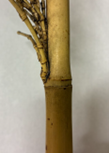
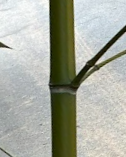
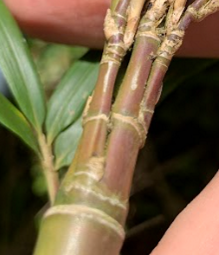
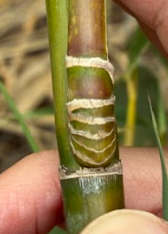
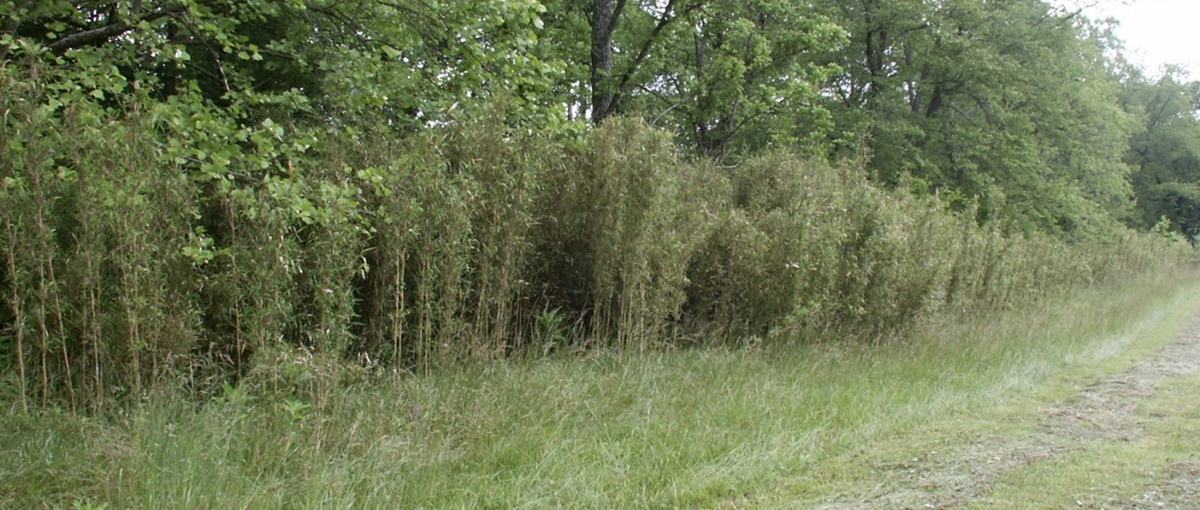
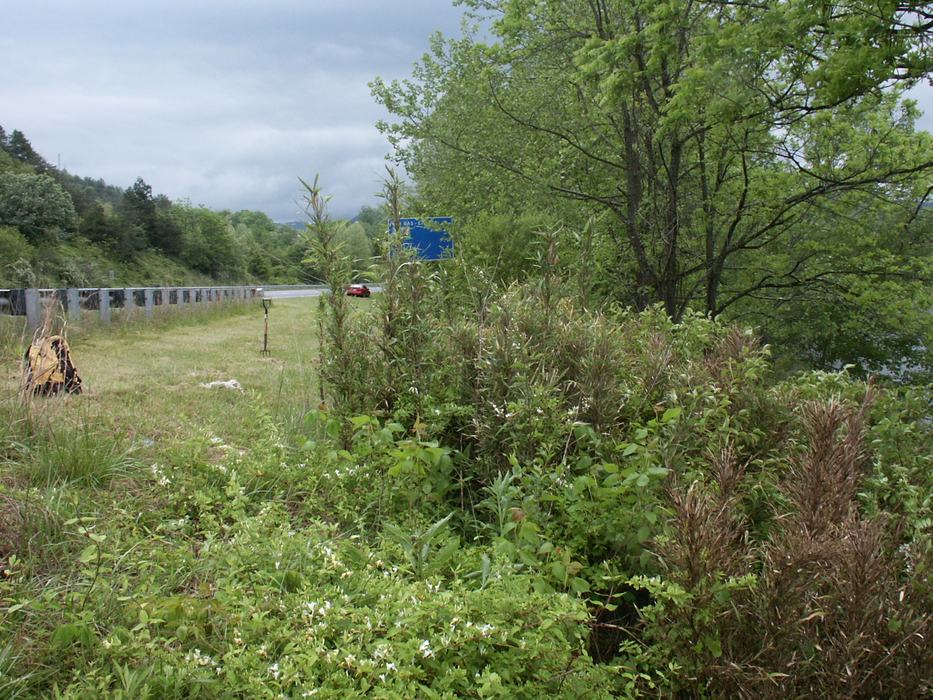
Identifying native river cane (Arundinria gigantea) is important, particularly if plant material is going to be transplanted, grown out for use in other locations, or management actions are being considered. The chart and photos below have been created to help landowners, non-profits, and decision makers identify native river cane and help promote this native plant with great benefits to the environment.
Note that great variability exists in physical characteristics of the same species (and even the same plant) depending on local growing conditions. Also note that correct identification of river cane has stumped experienced botanists and homeowners alike. Do not be discouraged and ask for opinions from local experts, particularly if you are considering growing out the rhizomes for transplanting.
Characteristic
Native river cane
Non-native bamboos
Height
Typically, 8 – 12 ft, frequently 15 ft, rarely more than 20ft.
Variable – very tall bamboos and dwarf bamboos are not native
Color
Green leaves and green stems, turning darker over the growing season
Can be green, yellow, or black
Branching angle
Nearly parallel to main stem
Variable, frequently 45 degrees from main stem
Groove on stem
Present where branch emerges transitioning to round at top of that internode
Consistently present or absent on each section
Stem diameter
Rarely larger than 1”
Variable and often over 2”
Base of first branch
0 – 1 compressed basal internodes
More than 1 compressed basal internode
Native river cane is frequently found between a stream and the edge of a mowed field. This patch of cane has persisted despite hostile growing conditions - competition for light and nutrients from the forest canopy and consistent mowing as the cane tries to expand into the field. Driving over the cane rhizomes also increases soil bulk density and decreases the ability of the plant to spread.
Learning to spot flowering or fruiting cane can also be difficult, but careful eyes spot cane flowering every year in our state. Look for deep purplish brown cane flowers in late April to early May. Be sure to check if seeds have formed some 3 - 5 weeks later. In the photo below, notice the fruiting and non-fruiting cane.