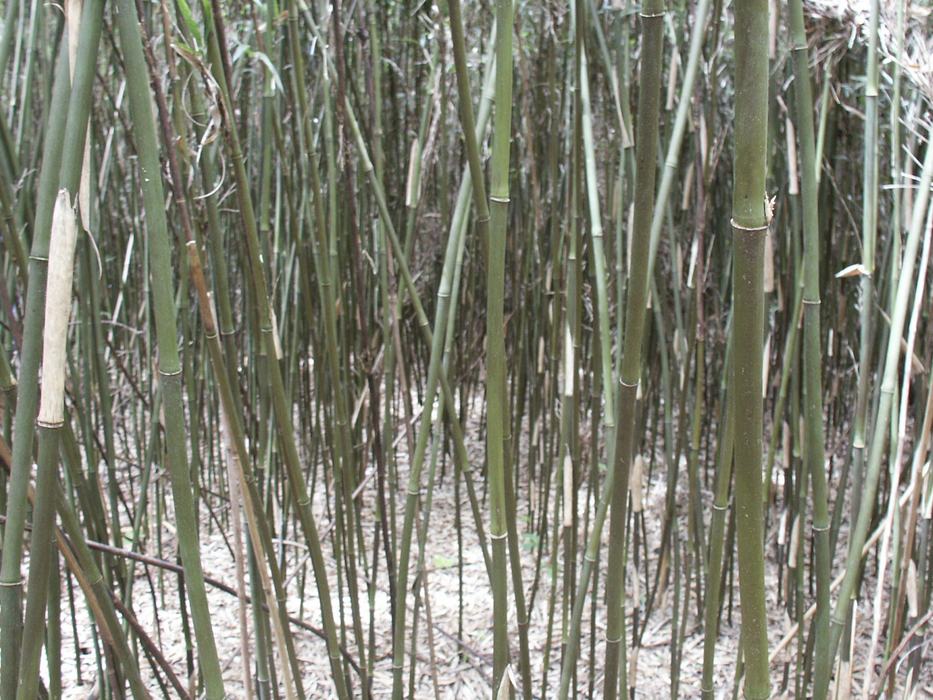
The environmental benefits of rivercane can not be overstated: it keeps streambanks in place during floods, filters excess nutrients from water flowing through it, and is habitat for animals both above and below ground. High density stands of rivercane, called canebrakes, are becoming more scarce due to development and agriculture, which have reduced the amount of rivercane on the landscape by 98% compared to pre-European contact levels. Rivercane does still form canebrakes and the benefits to the environment are multiplied in these increasingly rare places where rivercane is the only plant growing. Light levels are so low in a canebrake, seeds can not typically germinate in the leaf litter below.
How Rivercane Benefits the Environment
(Updated: March 17, 2025, 10:52 a.m.)
Erosion Control
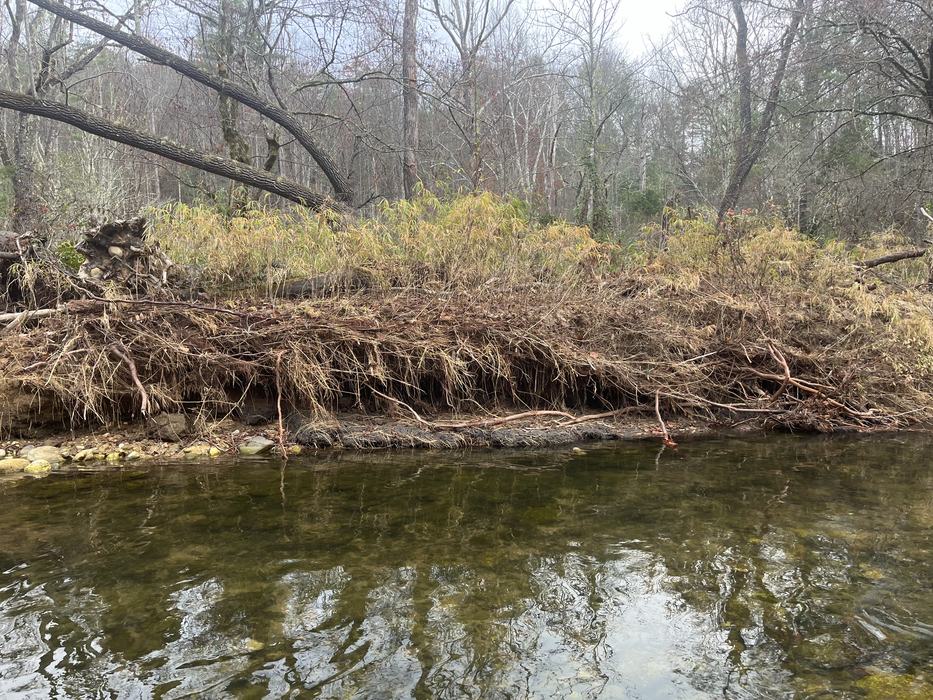
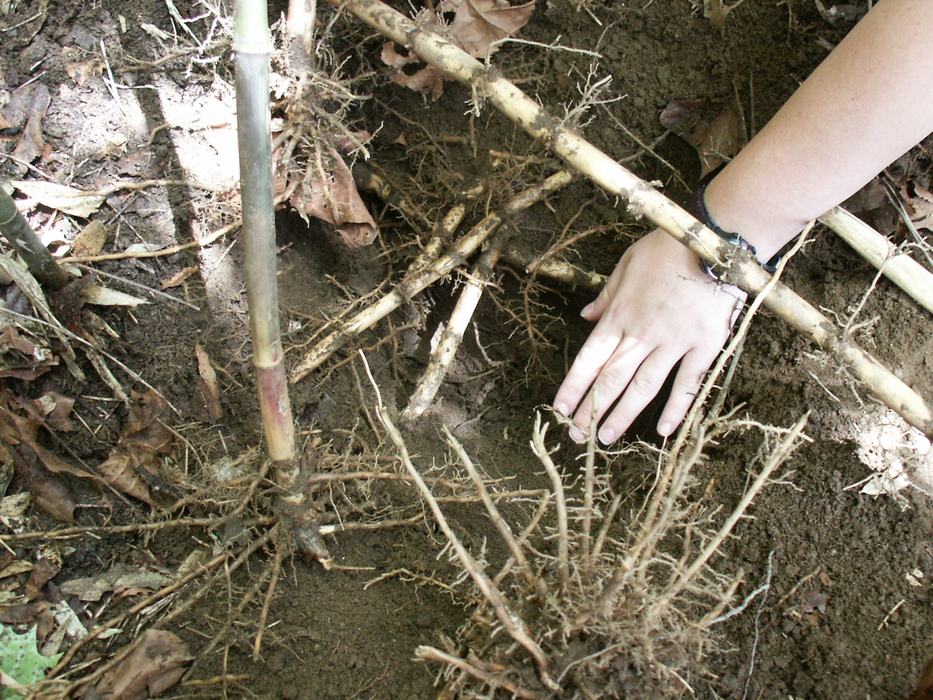
The dense network of underground stems (rhizomes) and roots serve as an excellent binder for soils during flood events. Anecdotal evidence from the active 2004 hurricane season in North Carolina (Ivan, Frances, Jeanne) and more recent observations after Hurricane Helene in September 2024 indicate riparian corridors with rivercane experienced dramatically reduced erosion and bed scour from prolonged and historic flooding. This can be attributed to the dense network of rhizomes and roots anchoring the plant to the ground. Where there are more roots, there are more steams and stem densities in NC canebrakes range from 5 to 20 stems per square meter and are consistent with published numbers from Arkansas, Illinois, and Louisiana.
Removal of Excess Nutrients
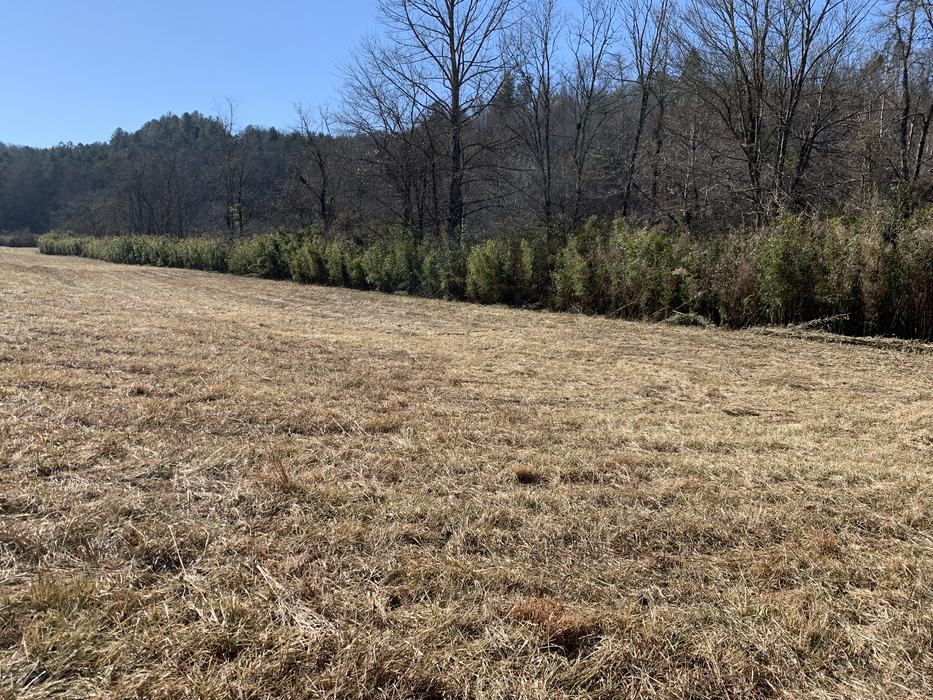
Rivercane is a highly effective riparian buffer, improving water quality by trapping sediment, nutrients, groundwater nitrates, and groundwater phosphates. Using data from 19 overland flow events, researchers in Illinois found a 21 ft (6.6m) riparian buffer of rivercane reduced sediment by 100% compared to a 76% reduction by a forest buffer of the same width. Giving livestock direct access to streams is a major source of excess levels of some nutrients in waterways and excluding animals with a riparian buffer of rivercane is a highly effective solution. The same team in Illinois also found grass buffers (including rivercane) are more efficient at removing sediment from overland flow events than much wider forest buffers.
Canebrakes as Habitat
Mature canebrakes provide food and shelter for so many species due to habitat heterogeneity. The canopy provides shelter and food for insects and birds while the soil itself is an unstudied trove of small mammals, annelids, and arthropods. The organisms living in and on the soil - think moles, voles, mice, rats, and shrews - create macropores contributing to exceptionally low soil bulk densities. There are numerous accounts of the interactions between rivercane and animals ranging from species that merely visit canebrakes to species that require stands of Arundinaria for survival called specialists. In an extensive literature reviews, researchers found mention or occurrence of at least 23 species of mammal, 16 birds, 4 reptiles, and 7 invertebrates in canebrakes. The true importance of rivercane on the landscape will never be known, however, due to extinction of some species which may have been rivercane specialists.
Join our mailing list!
Enter your email address to receive updates.
Written By